
DevelopingPoliticsTimeline
Alternative for Germany vs. Bauhaus
Updated 3 updatessince 20 outlets
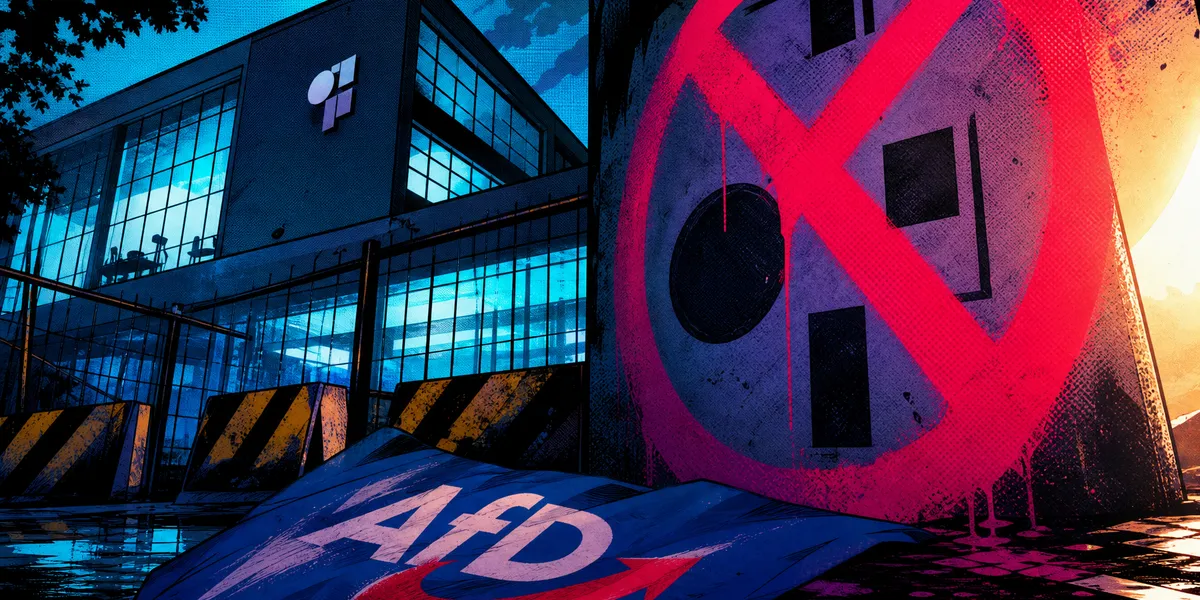
The AfD is influencing cultural policy in Saxony-Anhalt by redefining the legacy of the Bauhaus school, which they describe critically, as they gain support in the region.
Timeline
Now
Afd Party Targets Bauhaus Art Movement
EscalationAlternative for Germany party issued a statement targeting the Bauhaus school of design, referring to the iconic art movement as an 'aberration of modernism.
11 sources · U.S. News & World Report, San Francisco Gate
Afd Promises Patriotic Cultural Policy
EscalationAlternative for Germany (AfD) continues to gain traction in Saxony-Anhalt with a focus on a 'patriotic culture policy' aimed at reshaping the state's identity through the legacy of Bauhaus.
4 sources · The Guardian, DW
Covered by 3 outlets
8 sources · Sun Sentinel, Reuters Connect
- Origin Jun 22, 2026
The story so far
As of September 3, 2026
This story is about a state election in Saxony-Anhalt that has pulled the Bauhaus into the center of a political fight over identity. Alternative for Germany, the far-right party known by its German initials AfD, has made the school and its legacy a target, calling Bauhaus an “aberration of modernism” days before voters go to the polls on September 6. The movement was founded in 1919 and flourished in Dessau, where its campus and a museum still draw visitors. Nearly a century after the Nazis shut it down, the name Bauhaus again marks a line between competing ideas of what Germany should celebrate and fund.
The party’s program promises a “think German” push, a patriotic culture policy, and an end to public money for what it calls anti‑German art and culture. That is not an argument about taste so much as a plan to redirect grants, school curricula, and museum agendas. The setting matters: Dessau‑Roßlau’s jobless rate is about 10 percent, compared with 8 percent in the state and 6 percent nationally. The city’s population has fallen from 130,000 in 1990 to around 75,000, and the average age is over 50. Tourism tied to Bauhaus brings visitors, but officials say it does not fix the wider economy, which helps explain why a symbolic fight over heritage can carry electoral weight.
Where things stand: polls put the AfD above 40 percent statewide, well ahead of the Christian Democrats at roughly 23 to 26 percent. The Left is near 13 percent, the Social Democrats around 6 to 7 percent, and it is unclear whether the Greens or the pro‑business Free Democrats will clear the 5 percent hurdle to enter parliament. If smaller parties fall short, the AfD could win enough seats to govern on its own. The party’s lead candidate is Ulrich Siegmund. The current state premier is Sven Schulze of the Christian Democrats, whose party has a rule against working with the AfD, narrowing coalition options.
What is at stake now is control over the levers that shape public memory and everyday culture in a small state with outsized symbols. Authorities classify the AfD’s Saxony‑Anhalt branch as a confirmed extremist organization, a designation that helps explain why other parties refuse to partner with it and why the path to power for the AfD runs through winning outright. The Bauhaus clash has become a proxy for whether a party that promises to recast Germany’s story about itself can turn a cultural signal into governing power over education, the arts, and public funding.
Each entry is synthesized by AI from the reports linked on it, and labeled with the kind of change it represents. How Frameshift works · What the labels mean · Report an error
In the app
Read this timeline in Frameshift
Four stories are free on the web. The full Vault, with every timeline and brief, is in the app.