
DevelopingPoliticsTimeline
Congress–Court Showdown
Updated 7 updatessince 37 outlets
The ongoing saga revolves around tensions between Congress and the Supreme Court over judicial security, voting rights, and potential amendments, with justices testifying about threats and budget needs amid legislative debates.
Timeline
Now
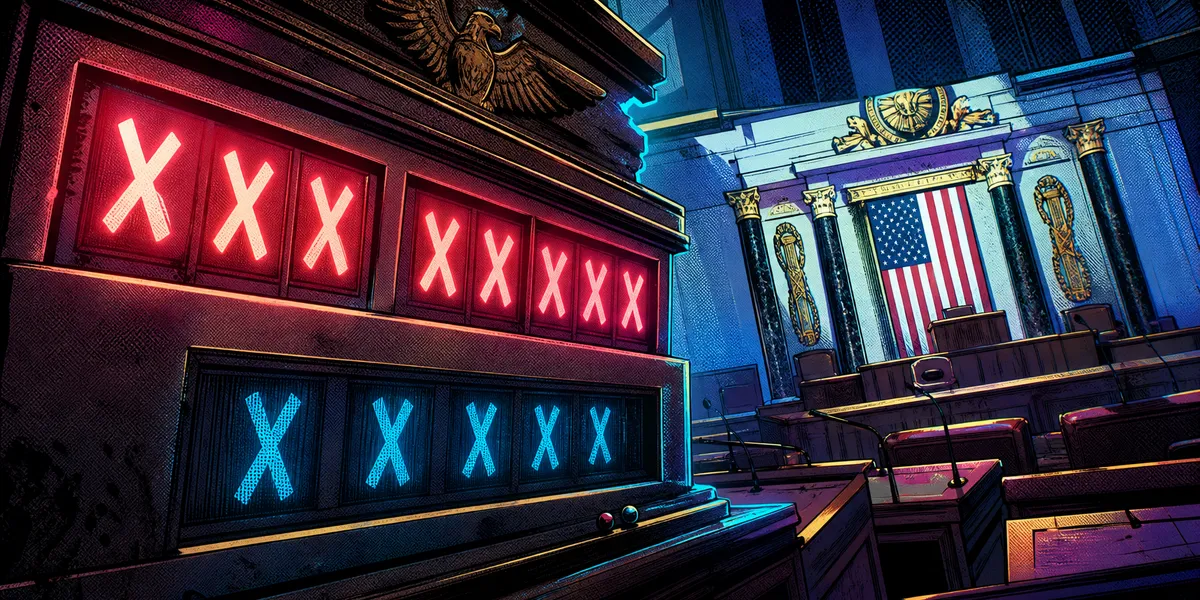
House voted 212-206 against a proposed constitutional amendment aimed at fixing the number of Supreme Court justices at nine.
4 sources · NBC News, Aol
Supreme Court Justices Elena Kagan and Amy Coney Barrett testified before Congress on July 14, 2026, detailing the rising threats against them and requesting over $200 million for enhanced security measures in the upcoming budget.
2 sources · New York Times, AP
Justices Elena Kagan and Amy Coney Barrett are set to testify before Congress on the Supreme Court's annual budget request during separate hearings.
10 sources · Washington Post, New York Times
Supreme Court permitted the enforcement of a recent ruling that significantly weakened a major provision of the Voting Rights Act, allowing the changes to take effect immediately.
14 sources · New York Times, NPR
Utah state legislators proposed a bill to add two seats to the Utah Supreme Court, signaling a concerted effort to reshape the court's composition and increase legislative control over judicial decisions.
9 sources · New York Times, Reuters
Supreme Court justices heard cases regarding the Voting Rights Act, with conservative members indicating potential support for diminishing key provisions of the law.
8 sources · Reuters, New York Times
Supreme Court draft opinion leaks
New FactsA leaked draft of a Supreme Court opinion indicating the Court intended to overturn Roe v. Wade was published on May 2, 2022, triggering nationwide protests and a sharp rise in threats against justices.
1 source · Washington Post
- Origin May 2, 2022
The story so far
As of September 2, 2026
This saga is a four-year test of power and accountability between Congress and the Supreme Court, colliding over money, security, the Court’s reach on voting rules, and now the size of the bench. The fight has spilled from appropriations rooms onto the House floor, where a bid to lock the Court at nine justices failed 212 to 206, short of the two-thirds needed to amend the Constitution. The measure, offered by Rep. Andy Biggs of Arizona, drew opposition from nearly every Democrat.
The chain is direct. The leak of a draft opinion to overturn Roe v. Wade sparked sustained threats and a lasting security posture around the justices. As the Court heard Voting Rights Act cases and then let a ruling that weakened a key provision take effect ahead of schedule, states moved: Missouri’s high court kept a gerrymandered congressional map for the August primary, the NAACP sought to block Tennessee’s new map, Alabama pushed its map fight back to the Court, and Virginia faced both legal and voter-driven bids to redraw its US House map. In Utah, lawmakers went further and passed a bill to add two justices to the state supreme court and five more lower-court judges, a concrete example of legislatures reshaping judiciaries while voting rules are in flux.
Now, in rare budget hearings, Justices Elena Kagan and Amy Coney Barrett have detailed rising threats and asked Congress for more than $200 million to bolster Supreme Court security. The number ties the post-leak threat environment and the Court’s polarizing docket to a specific line item that only Congress can set.
What is at stake is institutional leverage and its downstream effects. The House rejection keeps expansion in play while appropriators weigh a nine-figure security request the justices say they need. At the same time, the Court’s voting-rights moves are already refactoring who draws districts before the 2026 elections, while statehouses test how much control they can assert over their courts. The through-line is which branch and which level of government set the ground rules when law, security, political maps, and the Court’s size intersect.
Each entry is synthesized by AI from the reports linked on it, and labeled with the kind of change it represents. How Frameshift works · What the labels mean · Report an error
In the app
Read this timeline in Frameshift
Four stories are free on the web. The full Vault, with every timeline and brief, is in the app.