
DevelopingSocialTimeline
Dover Port Blockade
Updated 1 updatesince 36 outlets
The Dover port anti-immigration blockade involves ongoing protests against immigration policies, significantly impacting transport routes. The latest event on September 5 saw 300 demonstrators cause major disruptions.
Timeline
Now
Up to 300 masked anti-immigration protesters blocked roads leading to the Port of Dover on September 5, causing severe travel disruptions to both freight and passenger vehicles.
36 sources · The Sentinel, Daily Record
- Origin Sep 5, 2026
The story so far
As of September 5, 2026
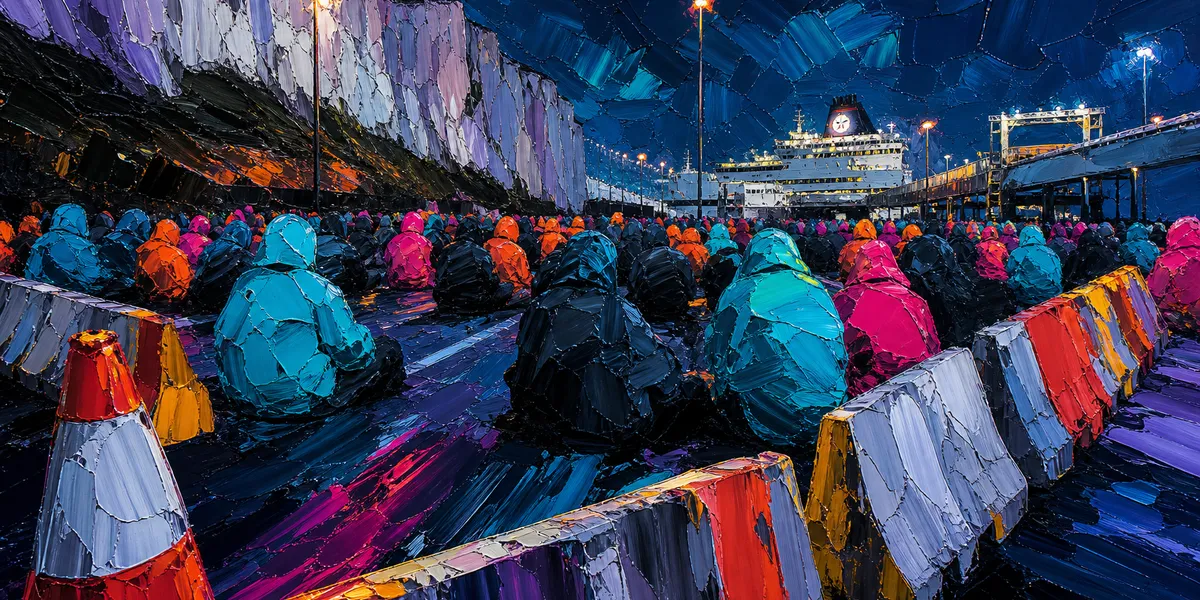
A coordinated blockade by up to 300 masked men halted access to the Port of Dover, Britain’s busiest ferry hub, with all routes in and out stopped for hours. Protesters in black clothing and balaclavas formed lines and linked arms at three points on the A20 between York Street and Jubilee Way, chanting “stop the boats.” National Highways recorded around four miles of queues and delays of up to 45 minutes as freight lorries and holiday traffic were held outside the port.
Access was partly restored via the M2 and A2 mid‑morning and traffic was free‑flowing around noon. Ferry operators kept sailings running and moved late arrivals onto the next departures. Police said officers were engaging with the groups, and initial updates noted no arrests, while ministers condemned the disruption. The scale of impact reflects Dover’s role: more than 9 million passengers and about 2 million freight vehicles used the port last year, and in summer it handles roughly 10,000 freight and 15,000 passenger vehicles a day.
The story has become a test of how quickly authorities can keep a critical trade artery open when small, mobile groups target choke points. Simultaneous blockages at multiple access roads by masked participants without banners, paired with slogans focused on small‑boat Channel crossings, explain both the swift halt to traffic and the initial police choice to negotiate while restoring flow. The leader of Dover District Council later criticized the police response as slow, underscoring the pressure on tactics for policing masked, coordinated protests at infrastructure sites.
Where it stands now: traffic has resumed and operators are clearing backlogs, but the method has been demonstrated at the UK’s main ferry gateway. What is at stake is the resilience of cross‑Channel trade and travel and the approach to protests designed not to march or rally but to shut down vital links, with a few hundred people able to stop a port that moves a large share of goods between the UK and the EU.
Each entry is synthesized by AI from the reports linked on it, and labeled with the kind of change it represents. How Frameshift works · What the labels mean · Report an error
In the app
Read this timeline in Frameshift
Four stories are free on the web. The full Vault, with every timeline and brief, is in the app.