
DevelopingTechTimeline
Leipzig Airport Drone Incidents
Updated 5 updatessince 111 outlets
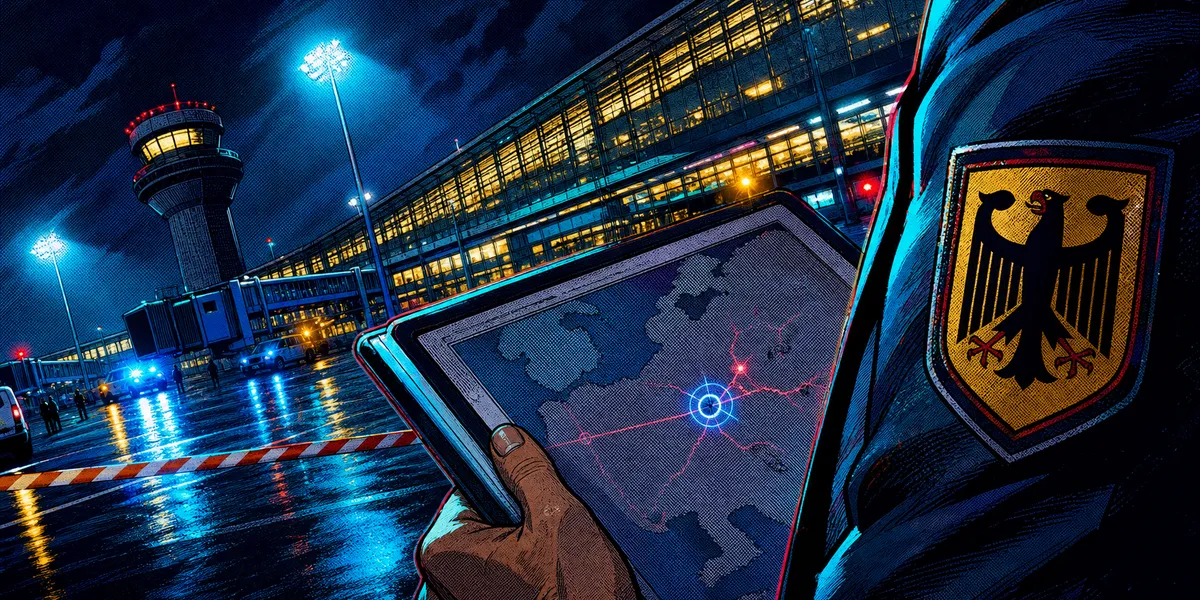
The 2026 Leipzig Airport drone incidents involve multiple discoveries of explosive drones, prompting German authorities to implement enhanced security measures and investigate potential Russian intelligence involvement.
Timeline
Now
Germany's Foreign Minister Johann Wadephul and Interior Minister Alexander Dobrindt announced on September 1, 2026, that Russian intelligence is believed to be responsible for the attempted drone attack at Leipzig-Halle Airport last month, which is reportedly used to ship military supplies to Ukraine
37 sources · Bloomberg Business, Washington Post
Germany opened a new Drone Security Technology Centre in Cochstedt, attended by Interior Minister Alexander Dobrindt and Research Minister Dorothee Bär, as part of heightened efforts to address drone-related threats following the discovery of an explosive drone at Leipzig Airport on August 5.
16 sources · Washington Post, DW
German authorities reported the discovery of a third drone near Leipzig/Halle Airport on August 14, believed to carry around 50 grams of military-grade explosive hexogen.
7 sources · Armyrecognition, TEMPO.CO
U.S. intelligence assessments indicate that a drone carrying explosives found at Leipzig-Halle Airport is linked to Russian secret services. Interior Minister Alexander Dobrindt described the incident as a 'new level of threat,' confirming that the drone was not the work of amateurs and likely reflects increasing…
21 sources · The Guardian, Wall Street Journal
Covered by 43 outlets
63 sources · New York Post, The Express Tribune
- Origin Aug 5, 2026
The story so far
As of September 1, 2026
Germany has now publicly attributed last month’s attempted explosive‑drone attack at Leipzig/Halle Airport to Russian intelligence. Interior Minister Alexander Dobrindt and Foreign Minister Johann Wadephul announced the finding and raised the national threat assessment from general to high. Berlin is closing a Russian consulate and a cultural center in the capital, expelling diplomats, restricting visas, and preparing broader measures with allies, while NATO governments and the EU have lined up in support.
What turned a drone sighting into a national‑security case were the specifics. An explosive‑laden device was found on the tarmac near a Ukrainian Antonov cargo plane and defused; that same night a separate small object struck a DHL freighter that landed safely in Hanover. Ten days later, investigators recovered a third drone west of the airport along with about 50 grams of hexogen, a military explosive also known as RDX, and found an improvised control antenna taped to a tree and scorch marks nearby. The build quality, the use of military‑grade explosives, and the use of multiple drones match techniques Western services associate with Russian covert operations.
The target matters. Leipzig/Halle is one of Europe’s busiest cargo hubs and a base for Ukraine’s Antonov Airlines, supporting NATO logistics. It also hosts the alliance’s SALIS heavy‑airlift program, which can call on only a handful of AN‑124 aircraft at short notice, with one guaranteed within 72 hours, a second within six days and a third within nine. Damaging even a single AN‑124 could remove a meaningful share of immediately available outsized airlift, while temporary airport closures and diversions already impose delays. The airport has logged repeated drone disruptions this year, showing how low‑cost tools can create outsized operational effects.
Germany has shifted from caution to countermeasures. It opened a new Drone Security Technology Centre in Cochstedt, is expanding a federal police counter‑drone unit from roughly 130 to 300 staff across eight locations, and is prioritizing mobile defenses at eight major airports including Leipzig/Halle. Officials stress that perfect coverage is unrealistic across vast perimeters, underscoring why Berlin is treating this as part of a broader pattern of hybrid attacks, meaning sabotage, arson, cyber intrusions and now weaponized drones. The story has become less about a single airport incident and more about protecting scarce logistics capacity that underpins Europe’s support for Ukraine.
Each entry is synthesized by AI from the reports linked on it, and labeled with the kind of change it represents. How Frameshift works · What the labels mean · Report an error
In the app
Read this timeline in Frameshift
Four stories are free on the web. The full Vault, with every timeline and brief, is in the app.