
DevelopingForeignTimeline
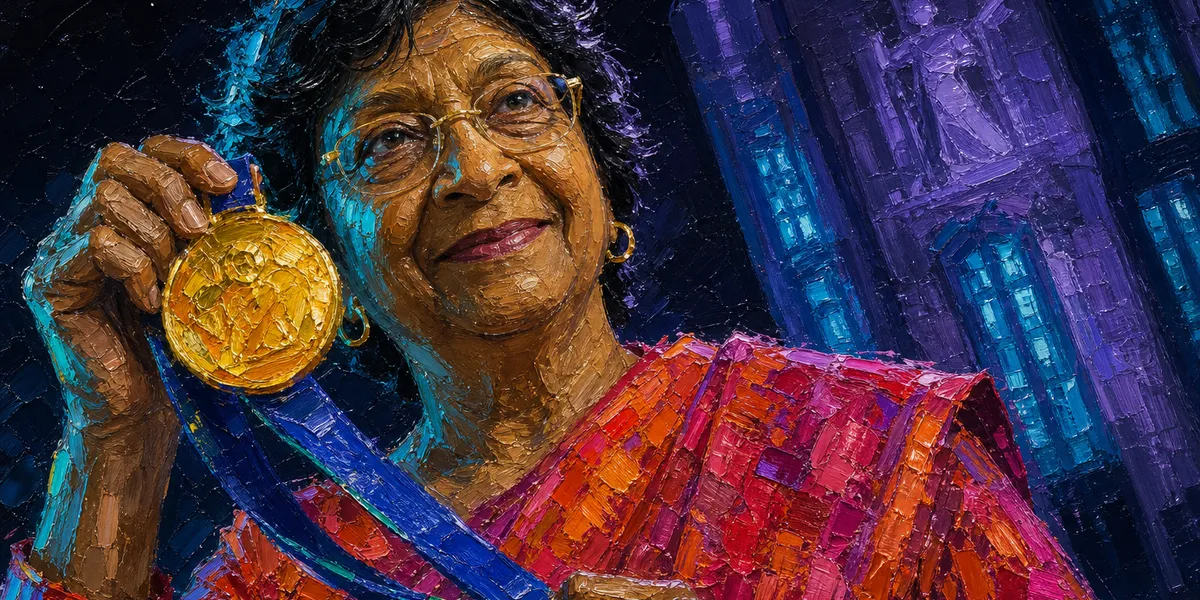
Navi Pillay's Nobel Peace Prize
Updated 2 updatessince 79 outlets
The 2026 Nobel Peace Prize was awarded to Navi Pillay for her contributions to peace and international law, prompting strong criticism from Israeli officials who argue it endorses anti-Israel sentiment.
Open questions
- Does Netanyahu turn Pillay’s prize into a domestic rallying cry?
- Will Washington quietly back Israel, or congratulate Navi Pillay?
- Does the Nobel Committee engage Jerusalem, or ride out the storm?
Timeline
Now
Norwegian Nobel Committee announced that the 2026 Nobel Peace Prize has been awarded to Navanethem 'Navi' Pillay, recognizing her efforts to promote peace and international law.
66 sources · BBC, Reuters
Israeli officials, including Prime Minister Benjamin Netanyahu, vocally denounced the Nobel Prize awarded to Navi Pillay, claiming it legitimizes anti-Israel hatred.
16 sources · New York Times, Reuters
- Origin Oct 9, 2026
The story so far
As of October 9, 2026
The Nobel Committee awarded the 2026 Peace Prize to Navanethem “Navi” Pillay for promoting peace and international law, elevating a jurist whose career runs from defending anti‑apartheid activists to serving as UN human rights chief and as a judge at the Rwanda tribunal and the International Criminal Court. Most recently she led a UN investigative panel on the Occupied Palestinian Territory that concluded Israel committed genocide in Gaza after the Oct. 7, 2023 attacks. She is now a judge at the International Court of Justice in a case alleging genocide in Myanmar.
Israel’s government reacted within hours, with Prime Minister Benjamin Netanyahu and the foreign ministry condemning the award as legitimizing anti‑Israel hatred and calling Pillay biased. Netanyahu’s office tied her commission’s work to former International Criminal Court prosecutor Karim Khan, who issued a 2024 arrest warrant for Netanyahu and was later dismissed for serious misconduct. At the same time, Pillay drew public praise from leaders including Ursula von der Leyen, Cyril Ramaphosa, Pedro Sánchez and Jonas Gahr Støre.
What gives the prize its sharp edge is timing and remit. By honoring the author of a genocide finding on Gaza, the committee has turned a disputed UN report into a centerpiece of the world’s most visible peace award. It did so on a day the United States imposed new sanctions on the International Criminal Court, underscoring a broader struggle over whether global legal institutions can act against powerful states and their leaders. The committee’s chair, Jørgen Watne Frydnes, framed the choice as a defense of the rule of law as the basis for peace.
The story now is less about one laureate than about the standing of international accountability itself. Israel is working to discredit the bodies and actors that have scrutinized its conduct, while the prize highlights Pillay’s role in building core precedents, including recognition at the Rwanda tribunal that rape can constitute genocide. The ceremony in Oslo will be a milestone, but the stakes lie in courtrooms and capitals deciding whether to back or punish the institutions that produced the findings Pillay is known for.
Each entry is synthesized by AI from the reports linked on it, and labeled with the kind of change it represents. How Frameshift works · What the labels mean · Report an error
In the app
Read this timeline in Frameshift
Four stories are free on the web. The full Vault, with every timeline and brief, is in the app.