
DevelopingCrisisTimeline
The 2026 Colombia Earthquake
Updated 3 updatessince 61 outlets
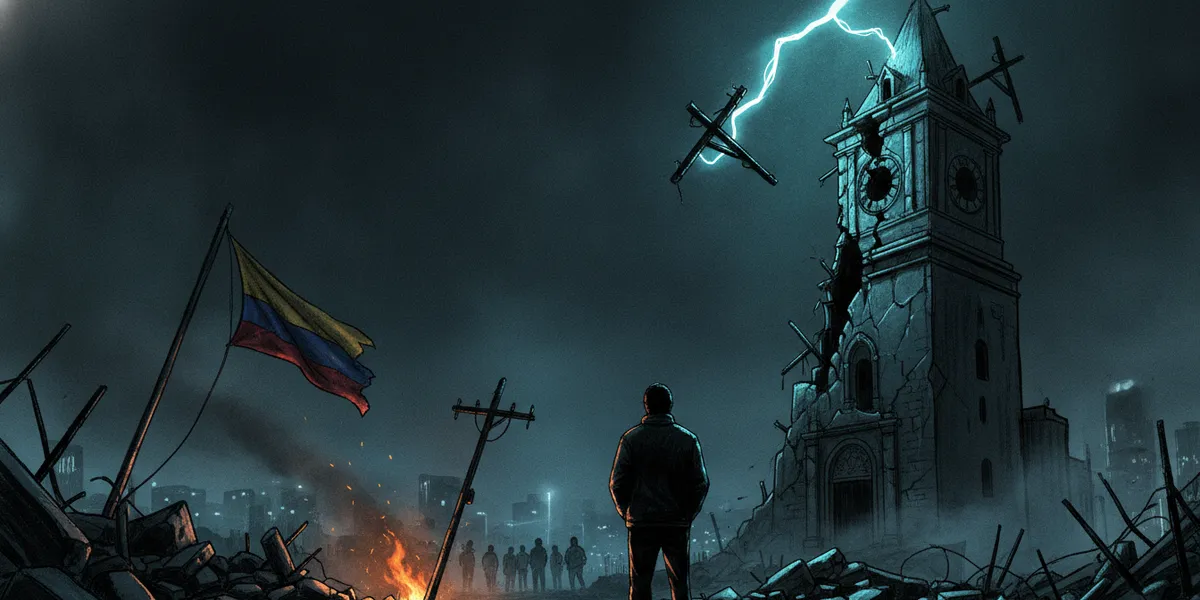
In response to a devastating 7.4-magnitude earthquake on August 10, 2026, Colombia has declared a state of emergency, with over 111 reported fatalities and selective acceptance of international rescue aid.
Timeline
Now
Colombia announced today it will only accept rescue teams from four countries to assist in earthquake recovery efforts.
18 sources · Reuters, New York Times
Colombian President Abelardo de la Espriella announced that at least 111 people have died following the powerful 7.4-magnitude earthquake that struck western Colombia on August 10.
31 sources · New York Times, Bloomberg
Colombia officially declared a state of emergency on August 10, 2026, in response to a 7.4-magnitude earthquake that resulted in at least 111 fatalities.
22 sources · Rolling Stone, Time
- Origin Aug 10, 2026
The story so far
As of August 13, 2026
Colombia is grappling with a major natural disaster: a 7.4-magnitude earthquake in the country’s west that has triggered a nationwide emergency response. The government, local authorities, and relief organizations are focused on life-saving rescues, medical care, and restoring essential services across affected communities.
The quake’s epicenter was near San José del Palmar in Chocó, with heavy damage reported across western cities including Cali and Pereira and shaking felt as far as Bogotá and Medellín. The confirmed death toll has climbed to at least 169 as search teams work through collapsed structures and landslides, and hundreds remain unaccounted for while the survival window narrows.
The emergency framework remains in place to speed funding and logistics, and authorities have tightened how outside help is used. Colombia says it will only accept rescue teams from four countries and has asked for equipment and supplies rather than more foreign personnel, a choice meant to keep operations coordinated at a smaller number of priority sites. Israel is among the teams admitted, while Mexico’s offer of rescuers was declined.
The facts driving the response are concrete: access to remote areas is slow, communications are spotty, and many buildings with thin concrete walls failed, producing lethal pancake collapses that require silent, precision work to find voids where people could still be alive. That combination explains the shift to tightly managed teams and why casualty figures remain provisional as rescuers move methodically through the hardest‑hit zones.
Each entry is synthesized by AI from the reports linked on it, and labeled with the kind of change it represents. How Frameshift works · What the labels mean · Report an error
In the app
Read this timeline in Frameshift
Four stories are free on the web. The full Vault, with every timeline and brief, is in the app.