
DevelopingPoliticsTimeline
The 2026 U.S. Midterms
Updated 9 updatessince 85 outlets
The 2026 U.S. Midterms are underway as candidates prepare for the elections on November 3, highlighting partisan strategies and key debates amid shifting voter sentiment.
Timeline
Now
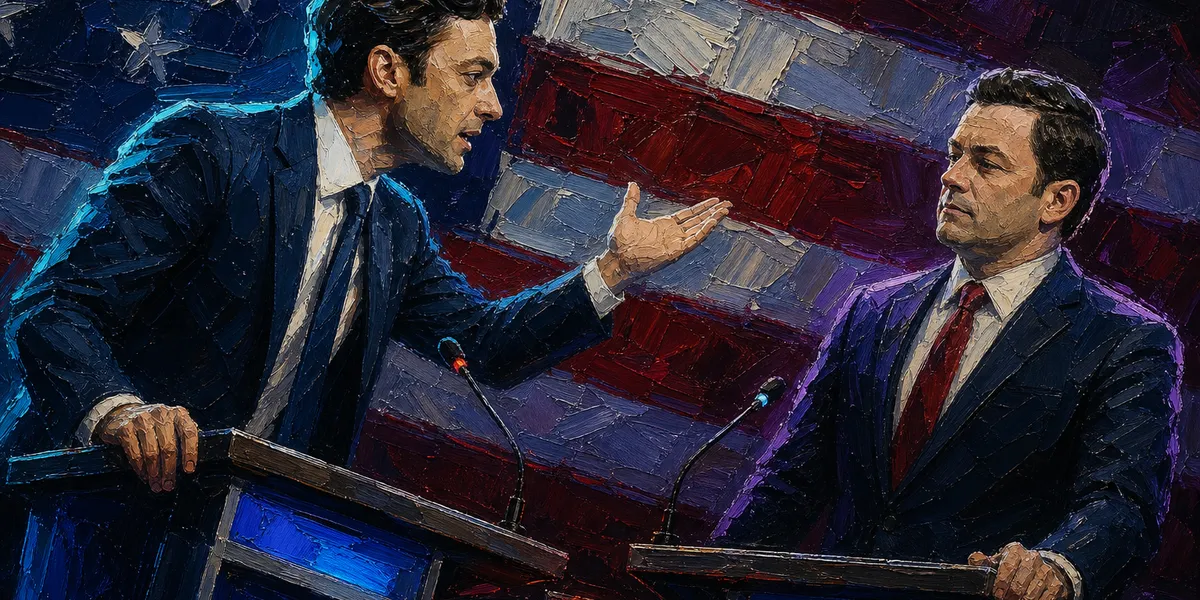
Jon Ossoff confronted Mike Collins in a fiery debate in Atlanta, Georgia, where he called out Collins for personal attacks and his family's extreme views.
8 sources · New York Times, Washington Post
Democrats are currently reported to have a clear advantage over Republicans as the midterm elections approach on November 3, 2026.
12 sources · NPR, BBC
Democrats announced they are adjusting their mail-voting strategy due to increasing wariness among voters regarding mail-in ballots.
16 sources · Politico, National Review
Senate Republicans decided not to leave Washington early and instead will focus on final votes this week, starting with a bipartisan bill on name, image, and likeness rules in college sports.
17 sources · Politico, Fox News
Republicans in Florida expressed unease as key races have transformed into toss-ups for Democrats, a dramatic shift from previous expectations.
6 sources · The Daily Beast, Jezebel
Virginia's Attorney General Jay Jones announced that the Department of Homeland Security (DHS) might have violated state election laws following details from a whistleblower report.
23 sources · AP, New York Times
Early voting kicked off today for the 2026 midterm elections across the United States.
15 sources · AP, The Atlantic
U.S. allies in Asia voiced worries about President Trump's willingness to soften support for Taiwan during his meeting with Chinese leader Xi Jinping next week.
10 sources · Kyodo News+, Straitstimes
Covered by 2 outlets
- Origin Dec 31, 2025
The story so far
As of October 9, 2026
Early voting is underway nationwide after Virginia opened in-person sites on Sept. 18, starting a six-week run to Nov. 3. Rules for voting by mail remain unsettled after two federal judges froze a new order from President Trump to tighten mail voting, with the Supreme Court expected to weigh in. Democrats have adjusted their mail-voting outreach as voter wariness grows, and the first early vote data shows signs of a Democratic edge.
The start came as Virginia’s attorney general, Jay Jones, warned that the Department of Homeland Security may have broken state election laws. A whistleblower described a DHS program that had U.S. Citizenship and Immigration Services staff, after less than two hours of training, running federal lists through state voter systems to find supposed noncitizen voters. The account says staff were told to review about 40 people a day, leaving roughly 12 minutes per person, and to create federal records on anyone flagged. Jones told Homeland Security Secretary Markwayne Mullin that Virginia’s voter lookup tools can only be used by individuals checking their own records, and he demanded written confirmation of what DHS directed and preservation of access logs and training materials.
This has turned the opening days of voting into a test of two boundaries at once: how far federal agencies can go in policing voter eligibility, and how firmly states control access to their election systems. The Trump administration has made noncitizen voting a central fraud claim and the Justice Department has sued to obtain detailed voter data from 30 states and the District of Columbia, even as documented cases of noncitizen voting are rare. The alleged DHS workflow’s speed targets and record-creation matter here because they shape how many names get flagged and what follows for those voters while an election is already in progress.
At the same time, the battlefield is wider than Republicans planned. In Florida, races once seen as safe are now toss-ups despite Trump’s 13-point win there in 2024, and Democrats now hold a clear advantage heading into Nov. 3, reflected in public polling and early voting indicators. Several GOP campaigns are contending with high-profile scandals, and the campaign season is unfolding against the backdrop of an ongoing war with Iran and a tough economy. Republicans have kept the Senate in session for final votes, including a bipartisan bill on college sports endorsements, even as campaigns peak. The immediate stakes are whether Democrats can convert a polling lead into control of one or both chambers, and whether Republicans can hold ground in places they once treated as safe.
Each entry is synthesized by AI from the reports linked on it, and labeled with the kind of change it represents. How Frameshift works · What the labels mean · Report an error
In the app
Read this timeline in Frameshift
Four stories are free on the web. The full Vault, with every timeline and brief, is in the app.