
DevelopingGeneralTimeline
The Flock Safety Backlash
Updated 10 updatessince 151 outlets
The backlash against Flock Safety centers on privacy concerns over its surveillance technology, leading to the suspension of federal cooperation and bans in multiple cities, highlighted by Tennessee's recent vote against its cameras.
Timeline
Now
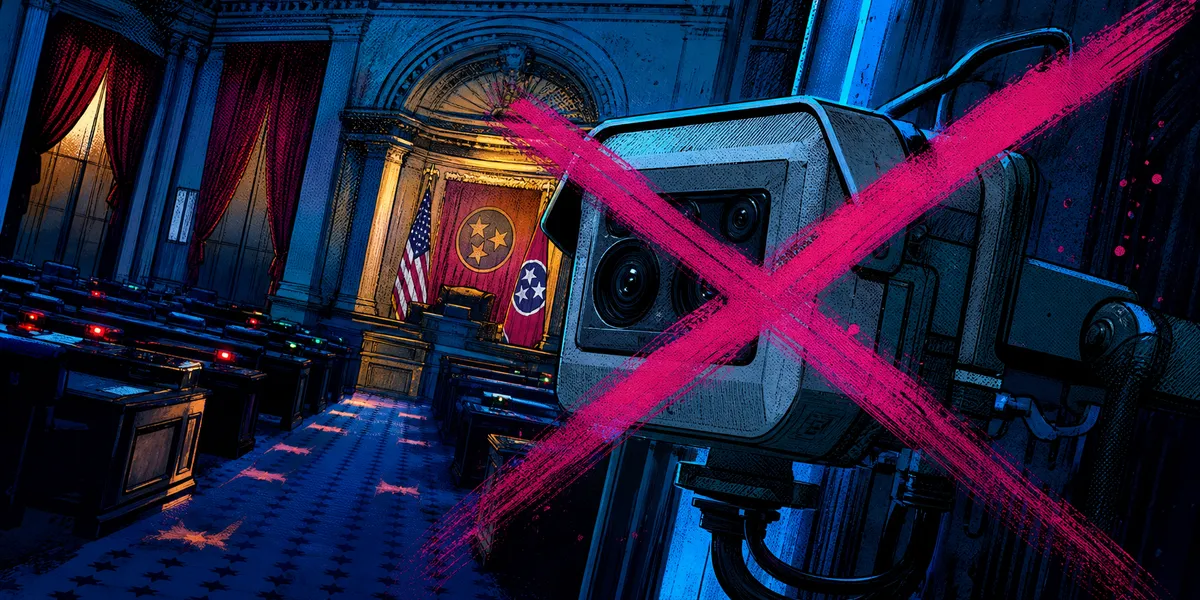
Tennessee House of Representatives voted 65-28 to ban Flock Safety cameras, marking a pivotal moment in the ongoing backlash against the surveillance technology.
16 sources · NBC News, TheTravel
U.S. Navy is reportedly weighing the possibility of renaming an aircraft carrier originally designated to honor Doris Miller, a Black hero of Pearl Harbor, to honor former President Donald Trump.
22 sources · Latest Asian, Middle-East
Flock Safety unveiled new privacy measures aimed at addressing public backlash due to police misuse of its automatic license plate reader network.
21 sources · Foxbusiness, BBC
US Cities Reject Flock Safety Cameras
EscalationCities across the United States are rejecting Flock Safety's surveillance cameras as privacy concerns escalate.
19 sources · NPR, Wall Street Journal
Underground network of privacy activists has begun disabling or destroying Flock Safety surveillance cameras throughout the United States.
6 sources · The Guardian, Newsweek
Texas Congressman Tim Burchett introduced a bill to restrict the use of Flock Safety's cameras and other surveillance technologies amid national concerns about privacy and the misuse of automated license plate readers (ALPR).
20 sources · New York Times, CBS News
Los Angeles Police Department announced over the weekend that it would not renew its contract with Flock Safety, citing serious concerns regarding privacy, data ownership, and civil liberties.
38 sources · CBS News, Los Angeles Times
Amazon's Ring unit announced the cancellation of its partnership with surveillance firm Flock Safety after significant backlash over a Super Bowl ad that raised privacy concerns.
18 sources · AP, BBC
Covered by 9 outlets
7 sources · The Week, Reuters
Flock Safety announced the suspension of its cooperation with federal agencies following an audit that revealed Customs and Border Protection (CBP) accessed its data improperly.
23 sources · CNBC, Los Angeles Times
- Origin Aug 25, 2025
The story so far
As of August 29, 2026
A nationwide fight over automated license plate readers has put Flock Safety at the center of a privacy-versus-policing reckoning. Cities, police departments, federal agencies, tech partners, lawmakers, and activists are battling over who controls vehicle location data, how it is used, and whether public-safety gains justify civil-liberties costs.
The backlash cohered around proof that access could slip its bounds. An audit found federal border agents pulled Flock data improperly, after which the company halted cooperation with federal agencies. A corporate partner walked away when Ring canceled a planned integration following privacy criticism, and the Los Angeles Police Department declined to renew over data ownership and civil-liberties concerns. Pressure then widened as an underground network began disabling cameras, a member of Congress proposed limits on license plate readers, and more cities rejected new installations. That momentum has now reached state lawmaking: the Tennessee House voted 65-28 to ban Flock cameras statewide.
Flock’s response is a slate of privacy and accountability changes that tighten how police can use the network. The company says it is adding stronger audit trails, new controls on who can query what and when, and changes to how and how long the data is stored, including cutting the default retention window from 30 days to seven. The chief executive has acknowledged the company waited too long to act on police misuse, which makes these guardrails a live test in places deciding whether to keep or cancel contracts.
What is at stake now is whether governance of this data can be made verifiable and enforceable across jurisdictions. The facts that explain the others are cross-agency reach and error-prone alerts: improper federal access and large-city concerns show the issue is not one department but the ease of sharing and searching at scale. The outcome turns on specific rules about retention, ownership, interagency lookups, and real-time auditing, and on whether these changes can stem a trend of canceled deals, physical sabotage, and now statehouse bans that have moved the fight from procurement desks to the street and into law.
Each entry is synthesized by AI from the reports linked on it, and labeled with the kind of change it represents. How Frameshift works · What the labels mean · Report an error
In the app
Read this timeline in Frameshift
Four stories are free on the web. The full Vault, with every timeline and brief, is in the app.