
DevelopingInvestigationTimeline
The Nord Stream Sabotage
Updated 8 updatessince 68 outlets
The Nord Stream sabotage saga began with explosions that damaged gas pipelines in 2022, leading to international investigations. As of mid-2026, various suspects have been charged or identified in connection with the attacks.
Timeline
Now
Croatian police arrested Ukrainian national Vladimir Z. in Pula, Croatia, on August 19, 2026, based on a European arrest warrant issued by Germany. He is accused of participating in the planting of explosives on the Nord Stream pipelines in September 2022.
18 sources · Reuters, The Guardian
German prosecutors formally charged Serhiy Kuznetsov, a former officer in the Ukrainian military, with orchestrating the 2022 Nord Stream pipeline attack, claiming he acted on orders from state authorities in Ukraine.
17 sources · BBC, New York Times
German federal prosecutors executed searches at premises linked to Gazprom Germania in Berlin and Frankfurt as part of an investigation into suspected sabotage against Germany's gas supply.
12 sources · AP, BBC
Lithuanian prosecutors announced the identification of 16 suspects connected to recent bomb blasts linked to the Nord Stream pipeline sabotage.
6 sources · Reuters, Wall Street Journal
Warsaw district court in Poland blocked the extradition of Volodymyr Z, a Ukrainian man suspected of involvement in the 2022 Nord Stream pipeline sabotage.
14 sources · AP, Financial Times
Volodymyr Z, a trained Ukrainian diver, was arrested in Poland on September 30, 2025, based on a European arrest warrant issued by German authorities.
16 sources · Reuters, The Guardian
Italian police arrested Serhiy K, a 49-year-old Ukrainian man, in Rimini under a European arrest warrant issued by German authorities. He is believed to be involved in coordinating the sabotage of the Nord Stream pipelines that occurred in September 2022, which was previously thought to potentially involve both…
17 sources · The Guardian, AP
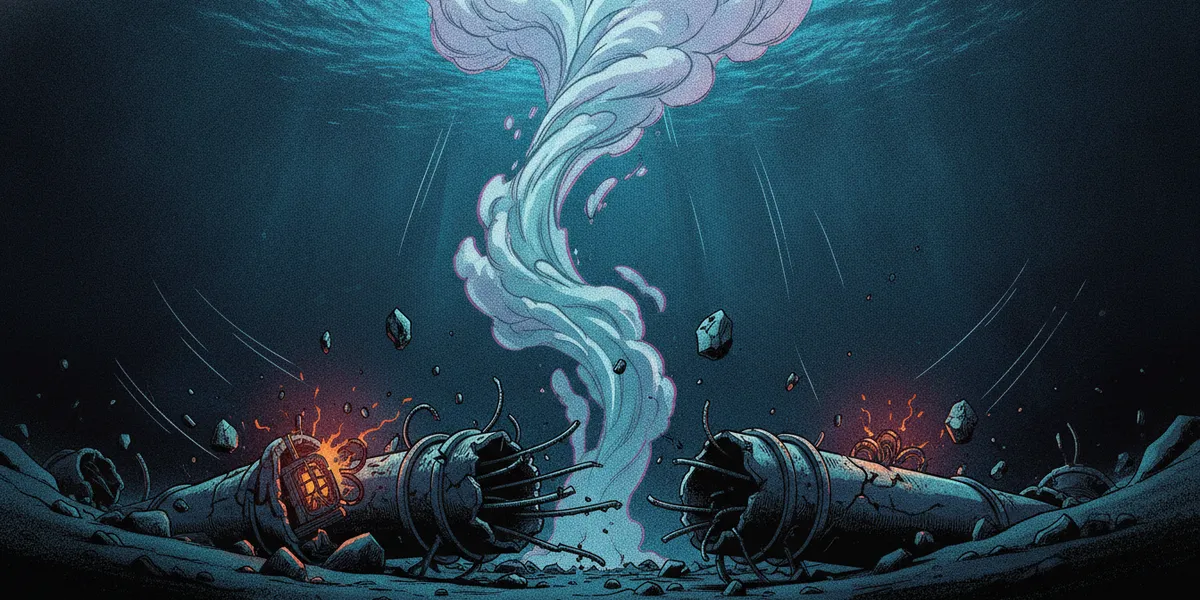
On September 26, 2022, underwater explosions damaged and ruptured sections of the Nord Stream 1 and 2 gas pipelines in the Baltic Sea, causing large gas leaks. The incidents were detected as sudden pressure drops and were treated by Danish, Swedish and German authorities as suspected sabotage, prompting international…
1 source · AP
- Origin Sep 26, 2022
The story so far
As of August 19, 2026
The Nord Stream case has moved from mystery to prosecution. German federal prosecutors have charged a former Ukrainian army officer, Serhii Kuznetsov, with orchestrating the 2022 pipeline blasts on orders from Ukrainian state authorities. This month a second suspect, a Ukrainian diver identified as Vladimir Z., was detained in Pula on a German European arrest warrant, after Poland had blocked his extradition in 2025. He now faces a new extradition process in Croatia while the charged organizer remains in custody in Germany.
Investigators have built a concrete trail around a small team that chartered the yacht Andromeda from Rostock using forged documents, sailed toward waters off Bornholm, and used professional diving to place timed explosive charges at roughly 80 meters. Traces of the military explosives RDX and HMX were found on the yacht. Three of the four Nord Stream lines were disabled on September 26, 2022. Prosecutors say the aim was to stop gas deliveries and cut Russian revenues during the war, and they have framed the blasts as an attack on civilian infrastructure amounting to a war crime. Ukraine denies state involvement.
What is at stake now is whether courts accept a state-ordered operation against infrastructure that terminates in Germany as a criminal act under German jurisdiction, or treat it as a wartime measure outside that frame. Germany asserts jurisdiction because the pipelines end at Lubmin and the damage struck its energy supply and national security. The split inside the EU is visible in the extraditions: Poland called the act a military operation and refused to hand over the diver; Croatia has detained the same man to consider Germany’s request.
In parallel, Germany is pursuing a separate sabotage probe on the Russian side of the ledger, raiding premises tied to the former Gazprom Germania over an alleged attempt in 2022 to disrupt Germany’s gas supply through corporate moves. Together these cases show the investigation has widened from a single set of blasts to a larger question of how the war reached Europe’s energy system, with courtroom findings now set to replace speculation. Kuznetsov is indicted in Hamburg; Vladimir Z. is in Croatian custody pending extradition.
Each entry is synthesized by AI from the reports linked on it, and labeled with the kind of change it represents. How Frameshift works · What the labels mean · Report an error
In the app
Read this timeline in Frameshift
Four stories are free on the web. The full Vault, with every timeline and brief, is in the app.