
DevelopingInvestigationTimeline
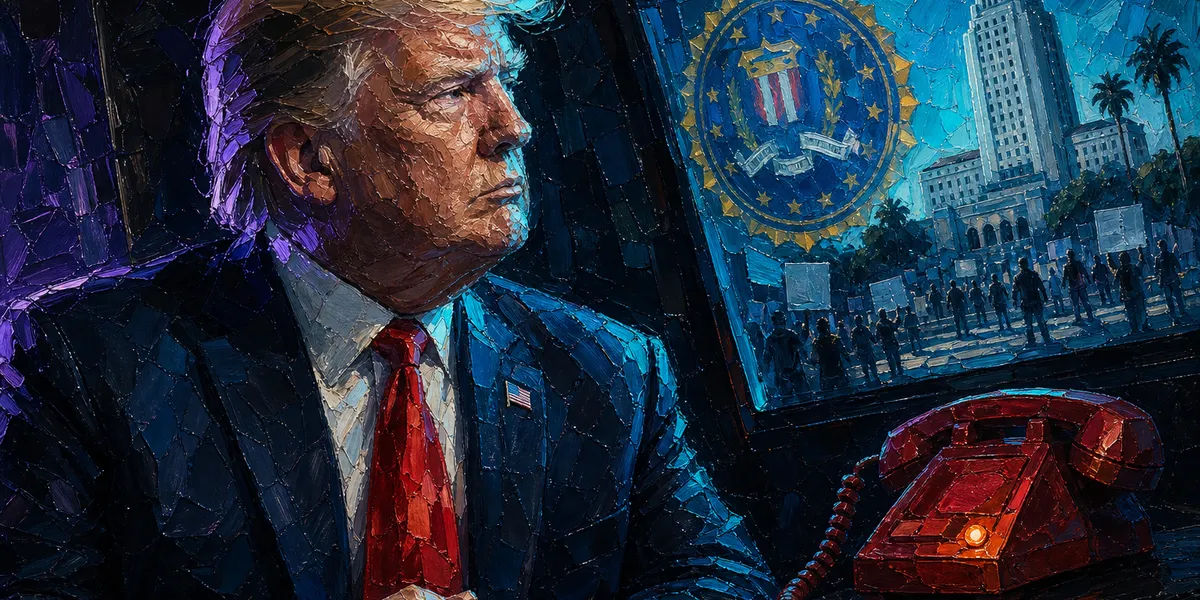
Trump–FBI Probe of Anti-ICE Protesters
Updated 3 updatessince 27 outlets
The ongoing investigation into anti-ICE protests, initiated after a 2026 demonstration in Minnesota, has revealed significant undercover monitoring by the DHS and allegations of Trump-directed inquiries into protesters.
Open questions
- Did Trump order FBI probes as payback or public safety?
- Will Christopher Wray back Jill Fields, or defend Trump’s directives?
- Was Minnesota a one-off, or a nationwide Homeland Security playbook?
Timeline
Now
Jill Fields, a whistleblower and former FBI supervisor, submitted a complaint to the Senate Judiciary Committee alleging that Donald Trump directed the FBI to investigate protesters demonstrating against his administration's immigration policies.
6 sources · NBC News, The Guardian
Court documents released in the case against 15 anti-ICE protesters reveal that the Department of Homeland Security undertook significant undercover operations in Minnesota, monitoring and infiltrating a range of anti-ICE and progressive groups.
21 sources · The Guardian, New York Times
On January 18, 2026, roughly two dozen anti-ICE protesters entered Cities Church in St. Paul, Minnesota, interrupting a Sunday service to confront a pastor who was an acting local ICE official. The roughly 25-minute protest was later announced as the subject of a Justice Department investigation.
1 source · Washington Post
- Origin Jan 18, 2026
The story so far
As of October 6, 2026
A former FBI supervisor, Jill Fields, has filed a whistleblower complaint with the Senate Judiciary Committee alleging that Donald Trump directed the FBI to open investigations into anti‑ICE protesters in Los Angeles in early 2025 despite warnings that doing so would violate people’s rights and FBI rules. The complaint says the bureau opened early probes after Trump took a personal interest, including after seeing protest videos online. The White House has denied the allegations.
Court records from a separate prosecution in Minnesota now give those claims a wider frame. In filings tied to charges against 15 anti‑ICE activists, federal documents describe Homeland Security undercover operations that infiltrated meetings in churches, libraries, and parks, monitored private chats, logged license plates, and used agency powers to obtain financial records from unions and nonprofits. Agents produced a chart labeled The Conspiracy linking 18 organizations, including major labor groups, to a central protest network, even where meeting notes highlighted plans for peaceful protests with safety marshals and police liaisons.
One incident explains how the legal risks have shifted. After a January protest inside a St. Paul church where demonstrators confronted a pastor who also served as a local ICE official, federal activity expanded in Minnesota. Records show an undercover agent attended a May 28 sparring class in the gym of University Baptist Church, a site covered by a federal court order that bars immigration authorities from conducting arrests, searches, or investigations on those church properties. Agents also watched the building, photographed cars, and ran plates. A finding that the order was violated could bring sanctions and imperil evidence gathered through that surveillance.
This story has become a test of whether federal agencies treated opposition to immigration policy as a security threat first and a criminal matter second. On one track, the Senate has a formal complaint alleging direct presidential involvement in targeting protesters; on another, a live criminal case has already put government surveillance methods into the open. What is at stake now is whether those investigations can withstand courtroom scrutiny and congressional oversight, and whether they crossed the constitutional lines that protect speech, assembly, and association.
Each entry is synthesized by AI from the reports linked on it, and labeled with the kind of change it represents. How Frameshift works · What the labels mean · Report an error
In the app
Read this timeline in Frameshift
Four stories are free on the web. The full Vault, with every timeline and brief, is in the app.