
DevelopingPoliticsTimeline
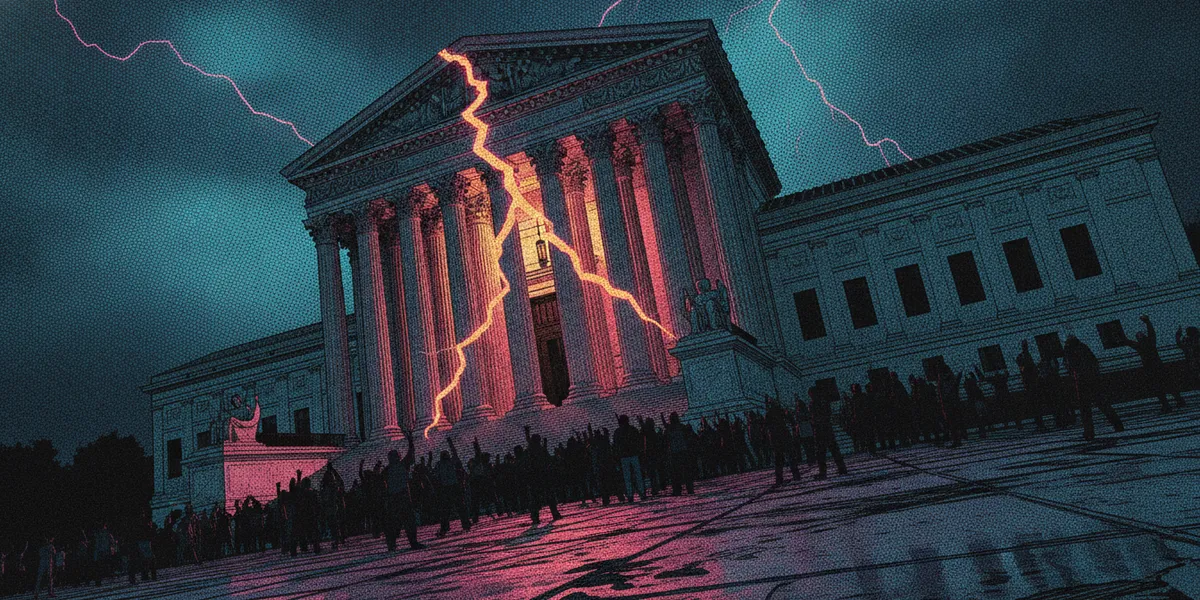
Trump–SCOTUS Birthright Clash
Updated 13 updatessince 44 outlets
The saga centers on President Trump's efforts to limit birthright citizenship through an executive order, which faced legal challenges culminating in a Supreme Court ruling that deemed it unconstitutional.
Timeline
Now
Trump Tightens Immigration for Spouses
EscalationTrump administration has announced that spouses of U.S. citizens will now face heightened scrutiny and mandatory interviews when applying for immigration benefits, transforming the previously straightforward process into a more complex and demanding one.
4 sources · Financial Times, New York Times
Trump Pushes AI Despite Risks
New FactsLeaked internal report from the Treasury Department warned that AI poses significant risks to the economic system.
5 sources · New York Times, Reuters
Trump administration's attempt to establish a Strategic Bitcoin Reserve is encountering significant hurdles as the Commerce and Treasury departments vie for control over its management.
4 sources · Bloomberg, New York Times
U.S. Supreme Court ruled on July 1, 2026, that President Donald Trump's executive order to limit birthright citizenship is unconstitutional, marking a major defeat for his immigration policies.
6 sources · New York Times, NPR
Supreme Court heard arguments on April 1, 2026, concerning Trump's executive order aimed at limiting birthright citizenship, with multiple justices indicating skepticism about the legality of such a move.
5 sources · Reuters, BBC
As the U.S. Supreme Court prepares to hear arguments on Trump’s executive order regarding birthright citizenship, discussions have increasingly spotlighted claims linking the policy to concerns about Chinese 'birth tourism'.
8 sources · New York Times, NPR
Supreme Court announced it will hear arguments regarding President Donald Trump's executive order aimed at redefining the concept of birthright citizenship, which he signed on January 20, 2025.
8 sources · NPR, New York Times
President Donald Trump delivered his State of the Union address on February 25, 2026, emphasizing his administration's aggressive stance on immigration reform and proposing significant changes aimed at curbing illegal immigration and promoting economic growth
6 sources · NPR, Reuters
Susie Wiles, acting as Trump's chief of staff, responded to a Vanity Fair article perceived as a 'hit piece' on Trump.
7 sources · BBC, NPR
On December 4, 2025, the Trump administration released a new National Security Strategy that condemned U.S. allies in Europe and promised a more assertive stance in global affairs.
6 sources · NPR, New York Times
Fulton County Judge Dismisses Trump Case
De-escalationFulton County judge has dismissed the election interference case against President Donald Trump and several co-conspirators, who were accused of attempting to overturn the 2020 election results.
4 sources · New York Times, NPR
President Donald Trump's administration showcased a pattern of sidestepping longstanding immigration regulations during the first six months of his second term, raising concerns over governance.
7 sources · NPR, Reuters
President Donald Trump signed an executive order titled "Protecting the Meaning and Value of American Citizenship" on January 20, 2025, seeking to limit or end birthright citizenship under the 14th Amendment.
1 source · AP
- Origin Jan 20, 2025
The story so far
As of July 6, 2026
This is an eighteen-month constitutional fight over whether a president can unilaterally narrow birthright citizenship guaranteed by the 14th Amendment. It pits the Trump administration against legal challengers and the Supreme Court, with stakes for separation of powers, the meaning of the Citizenship Clause, and the reach of executive authority over immigration.
The clash began when President Trump signed an executive order on January 20, 2025, seeking to limit birthright citizenship as part of a wider immigration crackdown. The Supreme Court took the case, and at arguments on April 1 several justices signaled skepticism that an executive order could override longstanding interpretations of the 14th Amendment. Political attention to claims about birth tourism, including by Chinese nationals, added heat but did not alter the legal core.
The Court has now ruled the executive order unconstitutional, a major defeat for the administration’s approach to the Citizenship Clause. With that route closed, the White House is pressing other levers that do not turn on constitutional text, including mandatory interviews and heightened scrutiny for spouses of U.S. citizens seeking benefits and a planned rule to tighten employment-based green card criteria.
What this story has turned into is a boundary line on presidential power paired with a pivot to administrative tools. The decision fixed the limit on redefining citizenship by decree, which explains the shift to agency process and eligibility standards that can reshape who is admitted and how fast without touching the 14th Amendment. The earlier focus on birth tourism shows the politics around the case; the controlling facts were constitutional text and precedent, and those now frame what is still in play.
Each entry is synthesized by AI from the reports linked on it, and labeled with the kind of change it represents. How Frameshift works · What the labels mean · Report an error
In the app
Read this timeline in Frameshift
Four stories are free on the web. The full Vault, with every timeline and brief, is in the app.