
DevelopingPoliticsTimeline
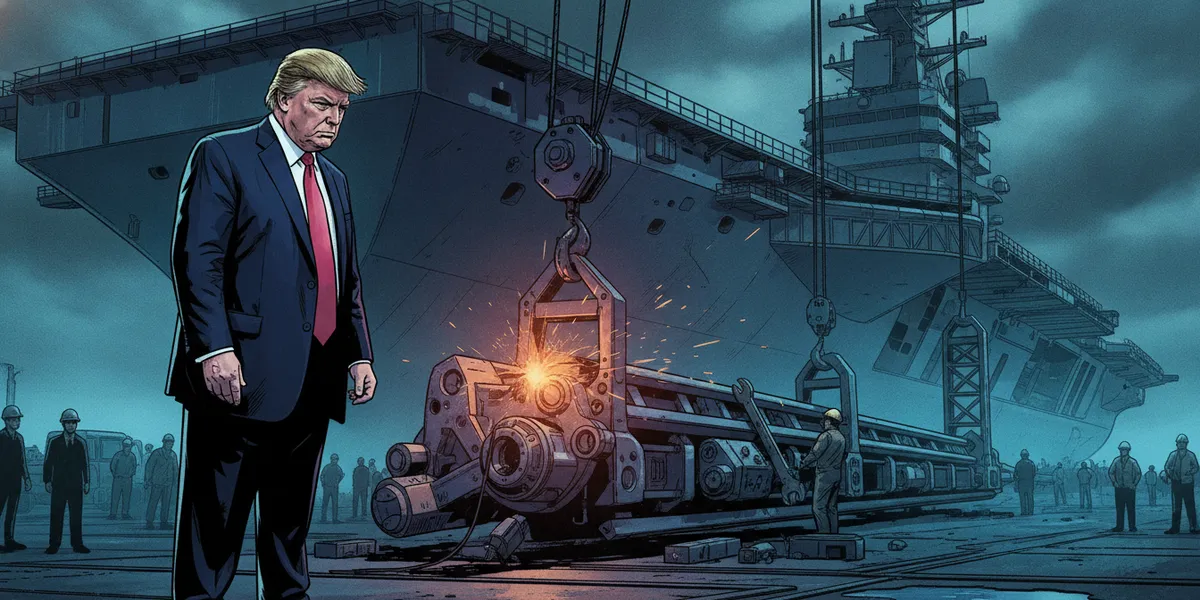
Trump's Carrier Catapult Rollback
Updated 3 updatessince 60 outlets
The ongoing saga centers on Donald Trump's push to revert the U.S. Navy back to steam catapults for future aircraft carriers, prompting a review of the advanced design and costs of the Ford-class carriers.
Timeline
Now
Trump Orders Return to Steam Catapults
EscalationDonald Trump ordered the U.S. Navy to ditch advanced electromagnetic launch systems for jet fighters and revert to steam catapults on future Ford-class aircraft carriers.
44 sources · Breaking Defense, USNI News
U.S. Navy confirmed it is reviewing the design and costs of the Ford-class aircraft carrier, one of its most advanced warships.
9 sources · AP, Wall Street Journal
Donald Trump stated plans to implement an executive order that would require the U.S. Navy to use steam power instead of electromagnetic catapults on future aircraft carriers.
12 sources · The Guardian, Washington Post
- Origin Oct 28, 2025
The story so far
As of August 13, 2026
This is a fight over what launches U.S. carrier aircraft, the Navy’s newer electromagnetic system versus legacy steam catapults, and who sets the fleet’s direction. The White House, the Navy, and Congress are the actors that matter, with billions in shipbuilding, carrier readiness, and the industrial base at stake. The debate centers on future Ford-class carriers and the Navy’s broader modernization plans, and it now sits inside a larger push to reshape how and where the United States builds warships.
Over the past year, Donald Trump signaled he would mandate a return to steam catapults, challenging the Navy’s shift to electromagnetic launchers on the Ford class. The Navy then opened a review of Ford-class design and costs, putting the question of launch technology back on the table. That sequence set up a direct presidential directive on what systems future carriers should use.
The order has now been issued: future Ford-class ships are to drop electromagnetic launchers and revert to steam. It arrives alongside a presidential memo on rebuilding the Navy and its shipbuilding base, which pairs the catapult decision with industrial policy, including a fifth public shipyard and a path to buy warships from foreign yards. That linkage explains the timing and the scale of the change, since it ties a technical choice to an attempt to expand capacity quickly and redirect contracts, even as ongoing carrier construction and existing agreements would face costly redesigns if plans already on the books are altered.
What remains contested is whether electromagnetic systems have matured enough to outperform steam and whether reverting would save money or add years of delay. Implementation turns on engineering feasibility for ships designed around electric launch, contract modifications, and appropriations. The strategic frame has shifted as well: China’s newest carrier fields electromagnetic catapults and its fighters have completed catapult trials, so the U.S. choice now weighs near-term industrial speed and risk against a rival moving into the newer technology.
Each entry is synthesized by AI from the reports linked on it, and labeled with the kind of change it represents. How Frameshift works · What the labels mean · Report an error
In the app
Read this timeline in Frameshift
Four stories are free on the web. The full Vault, with every timeline and brief, is in the app.