
DevelopingForeignTimeline
U.S.–Venezuela Oil Showdown
Updated 7 updatessince 85 outlets
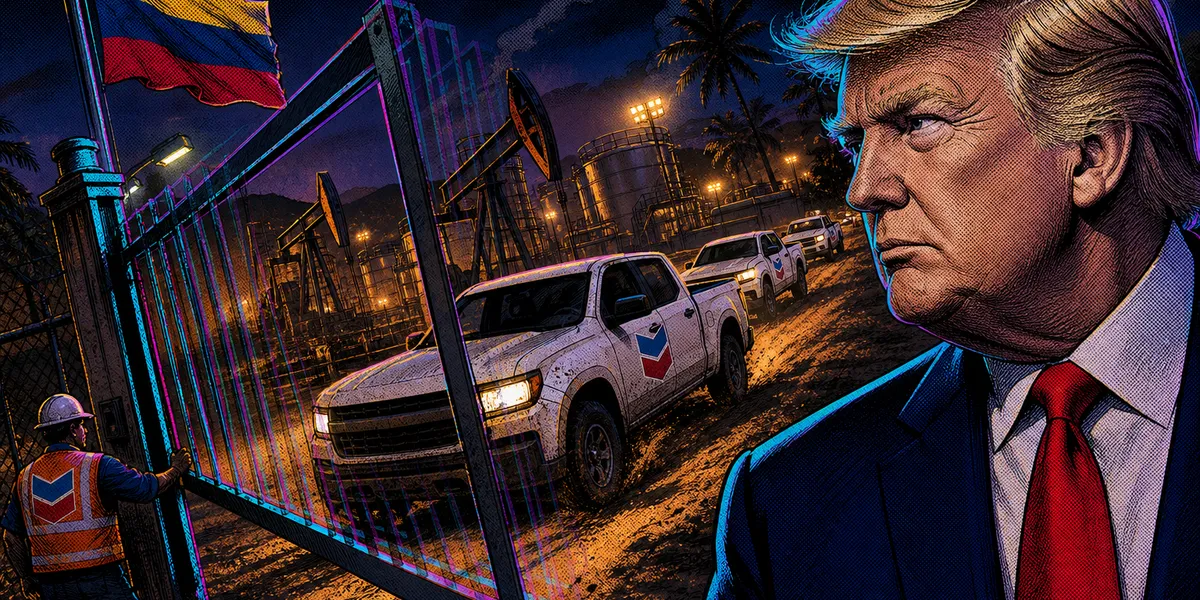
The U.S.–Venezuela oil showdown centers on U.S. control over Venezuela's oil resources following the capture of President Maduro, leading to eased sanctions and significant negotiations regarding energy production.
Timeline
Now
U.S. eases Venezuela oil sanctions
New FactsChevron confirmed it will expand its operations in Venezuela, which follows the easing of U.S. sanctions and the significant political changes in the country.
19 sources · AP, Politico
Donald Trump announced on Friday that the United States has secured majority control of 65 billion barrels of Venezuela's proven oil reserves in what he claims is the 'biggest oil deal in world history.
12 sources · CNN International, Toronto Sun
María Corina Machado and Edmundo González announced their conditions for participating in the upcoming dialogue between the Venezuelan government and opposition members.
16 sources · Reuters, Washington Post
U.S. eases sanctions on Venezuelan oil sector
De-escalationOn February 10, 2026, the U.S. eased sanctions on Venezuela's energy sector by issuing two general licenses, allowing global energy companies to engage in oil and gas operations in the country.
23 sources · Bloomberg, Reuters
Delcy Rodríguez signed a law on January 29, 2026, that privatizes Venezuela's oil sector, reversing two decades of state control.
17 sources · Reuters, BBC
On January 9, 2026, President Trump convened leaders from major oil companies, including Chevron and ExxonMobil, in the White House to discuss rebuilding Venezuela's oil industry. Trump assured the executives that their investments would be protected and framed the initiative as beneficial for both the U.S.
17 sources · Reuters, Bloomberg
On January 3, 2026, U.S. forces carried out a pre-dawn operation in Caracas that captured Venezuela’s president Nicolás Maduro (and his wife, Cilia Flores). That seizure was the immediate trigger that led to U.S. control over Venezuelan oil shipments, tanker seizures, and subsequent U.S.–Venezuela oil negotiations…
4 sources · Malay Mail, GV Wire
- Origin Jan 3, 2026
The story so far
As of September 2, 2026
This is now a story about whether Washington can turn a military seizure into a durable oil revival. After U.S. forces captured Nicolás Maduro in January, the United States took control of Venezuelan oil flows, seized tankers, and began selling tens of millions of barrels on its own. Acting leader Delcy Rodríguez then signed a law opening the sector to private operators. Today the White House says it has secured majority control over 65 billion barrels of Venezuela’s proven reserves, an arrangement it calls the biggest oil deal on record and one it says will help draw close to $100 billion of investment.
The pieces that make that claim possible are legal and financial. Rodríguez’s January overhaul keeps the oil in the ground as state property but lets private companies run fields and sell the output, with disputes handled by independent panels outside Venezuelan courts and a cap on the state’s take at 30 percent. Washington meanwhile issued broad permissions that let energy firms work in Venezuela despite sanctions and signed an order stating that Venezuelan oil revenue is being held in U.S. accounts for governmental and diplomatic purposes, shielding it from private claims. Together, those steps explain how the U.S. can promise control and investor protection without owning the reserves outright.
What is at stake now is execution. Major oil companies have been cautious. In a January White House session they questioned whether Venezuela was investable without stronger guarantees and security, and they did not commit to the scale of spending the president sought. Since then the U.S. says it has sold more than $13 billion of Venezuelan oil from captured flows. Moving from ad hoc sales to long‑term operating control over a 65 billion barrel slice of a country that holds about 303 billion barrels will only matter if firms sign, bring in rigs, rebuild power and upgraders, and lift output.
Politics and stability sit underneath the investment case. Talks backed by the U.S. are starting without key opposition figure María Corina Machado, who set conditions for joining, while earthquake recovery adds urgency and cost at home. The administration is linking the oil push to its broader aim of adding global supply during the Iran conflict. The present question is whether contracts, money flows shielded in U.S. hands, and security commitments can give investors the confidence to move, and whether the political track can give those contracts staying power so barrels, revenue, and lower pump prices follow.
Each entry is synthesized by AI from the reports linked on it, and labeled with the kind of change it represents. How Frameshift works · What the labels mean · Report an error
In the app
Read this timeline in Frameshift
Four stories are free on the web. The full Vault, with every timeline and brief, is in the app.